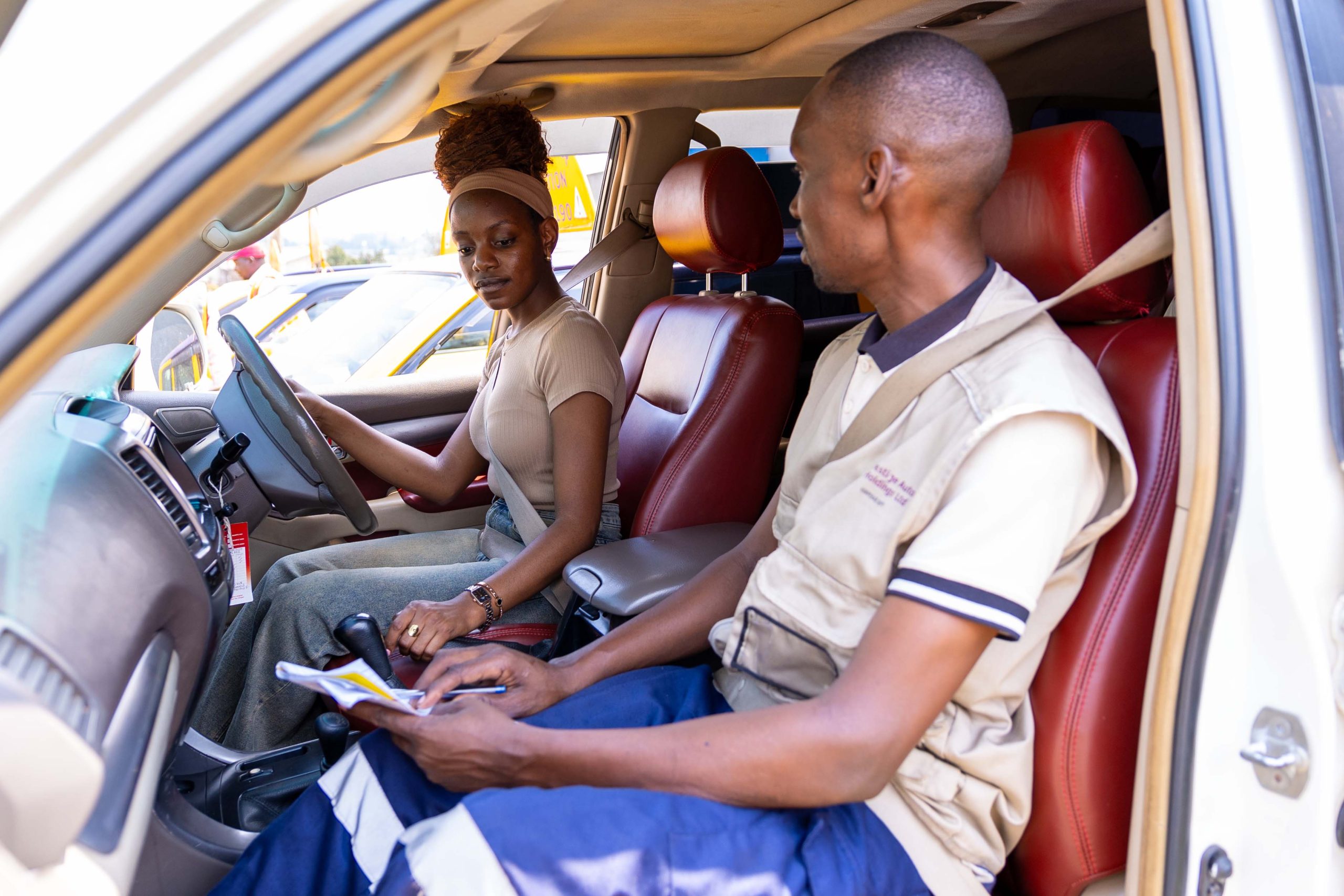
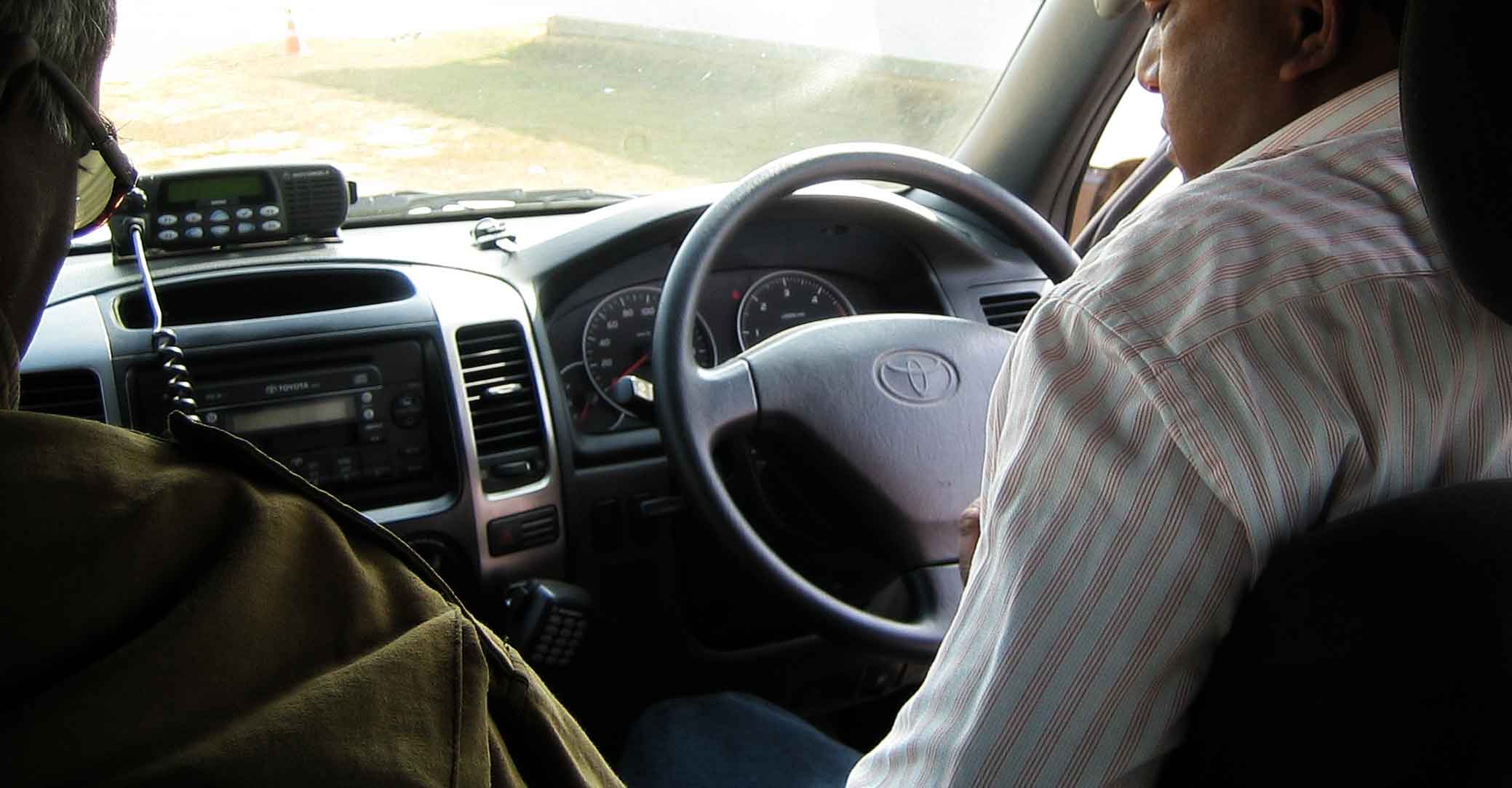
Learning to drive in Uganda is an exciting step toward independence, but the path is often fraught with common pitfalls. Many learner drivers, whether practicing with a professional instructor or a family member, fall into the same traps. These mistakes don’t just lead to failed driving tests; they create ingrained habits that contribute to the challenges and risks on Ugandan roads, especially within the high-pressure environment of Kampala traffic.
By identifying and correcting these five biggest mistakes early, you can become a safer, more confident, and ultimately, a more proficient driver.
1. Poor Clutch and Gear Control (The ‘Jerky Start’)
This is perhaps the most common mistake for learners using manual transmission vehicles, which are prevalent in Uganda. It manifests as a hesitant or jerky start, often stalling the engine, particularly on inclines. This creates anxiety, wastes time, and is a significant traffic bottleneck.
📉 The Mistake
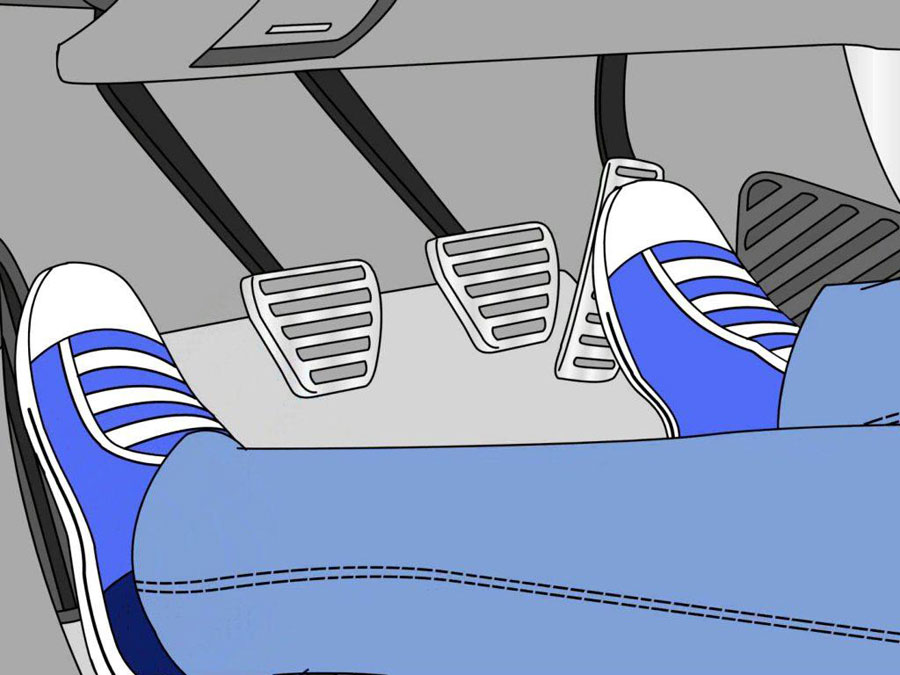
Learners fail to find the “biting point” of the clutch—the precise moment the clutch plates engage. They tend to release the clutch pedal too quickly without applying corresponding acceleration (gas). On hills, they rely too heavily on the handbrake and panic when releasing it, leading to a rollback.
✅ How to Avoid It
- Master the Biting Point: Practice lifting the clutch pedal very slowly in a quiet, flat area until you hear the engine note drop slightly or feel the car just start to move. Hold it there, then slowly feed in the accelerator while smoothly releasing the clutch the rest of the way.
- The Hill Start Technique: On an incline, use the handbrake.1 Engage the clutch to the biting point and apply enough gas to raise the engine revolutions (RPMs) slightly above idle. Now, smoothly release the handbrake only when you feel the car is ready to pull forward slightly against the brake.2
2. Inconsistent and Delayed Observation (The Blind Spot Gamble)
In Uganda, where traffic often includes fast-moving taxis (matatus), unpredictable motorcycle taxis (boda-bodas), and pedestrians, comprehensive observation is the single most important habit for safety. Learners often rely only on the windscreen and the rearview mirror, completely neglecting the critical blind spots.
📉 The Mistake
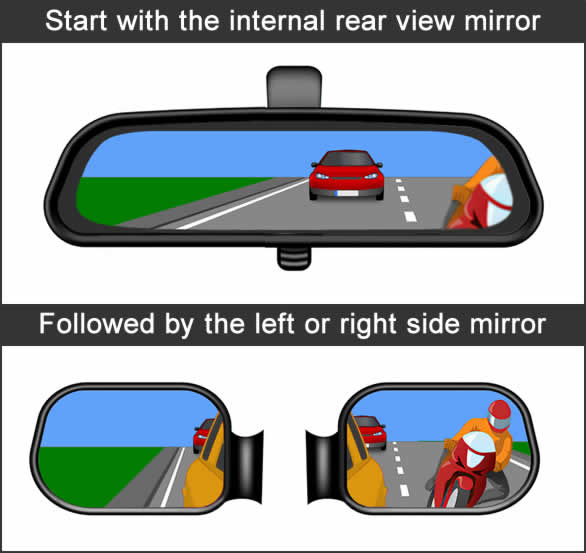
Learners often fail to use the Mirror-Signal-Manoeuvre (MSM) routine consistently. They signal before checking their mirrors, or they check mirrors but fail to perform a head-check (looking over the shoulder) before changing lanes or pulling out from the curb. This makes them vulnerable to boda-bodas that typically hug the side of vehicles.
✅ How to Avoid It
- Establish the MSM Routine: Make it a non-negotiable routine for every change in speed or direction:
- Mirrors: Check the rearview and side mirror to assess the surrounding traffic.
- Signal: Give an appropriate signal to inform others of your intention.
- Manoeuvre: Execute the turn/change, but only after a crucial Head-Check to clear your blind spot.
- Constant Scanning: Train your eyes to constantly scan the environment, not just the car ahead. This includes checking mirrors every 5-8 seconds, especially before braking or slowing down.
3. Positioning Too Close to the Vehicle Ahead (Zero Cushion)
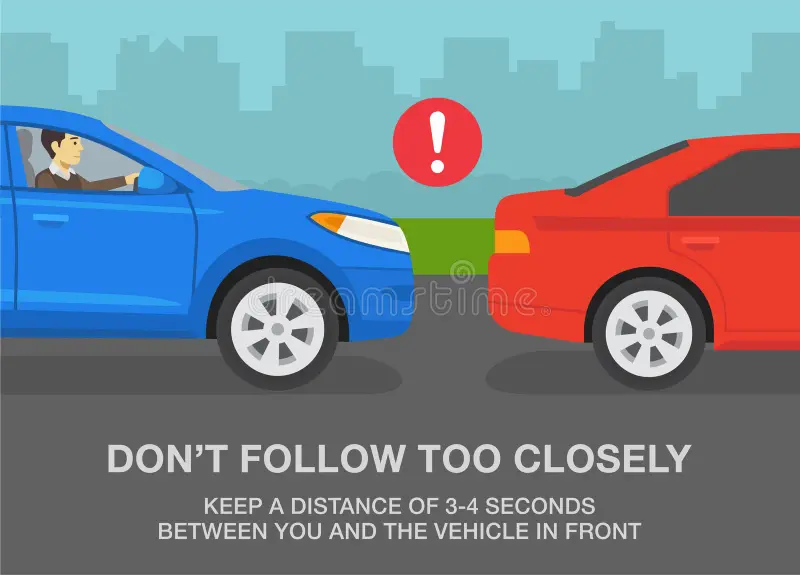
In congested urban areas like Kampala, the temptation is to close every gap to prevent other vehicles from cutting in. However, driving too close (tailgating) eliminates the safe braking distance and is a primary cause of rear-end collisions.
📉 The Mistake
Learners underestimate the time it takes to stop a moving vehicle. They follow the car ahead too closely, especially at higher speeds. This forces them to brake suddenly and harshly when the vehicle in front stops unexpectedly, creating a domino effect for the vehicles behind them.
✅ How to Avoid It
- Apply the 3-Second Rule: Choose a stationary object (like a tree or signpost) on the side of the road. When the vehicle in front passes that object, start counting: “One-thousand-one, one-thousand-two, one-thousand-three.”4 You should not reach the object before finishing the count.
- Increase the Gap in Poor Conditions: In rain, at night, or when following a large truck, increase the gap to $4 \text{ or } 5$ seconds. Your cushion of space is your greatest asset in defensive driving.
4. Hesitation and Indecision at Junctions and Roundabouts
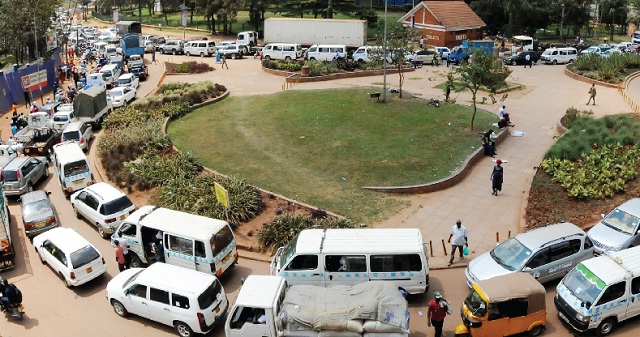
Ugandan junctions and roundabouts, such as those near Wandegeya or Jinja Road, are intimidating. Learners often hesitate excessively, missing opportunities to proceed safely, or they are indecisive, which confuses other drivers and can lead to aggressive maneuvers by others.
📉 The Mistake
When facing a steady flow of traffic, learners often freeze, waiting for a non-existent large gap. Conversely, they sometimes dart into a tiny gap without properly judging the speed of oncoming traffic, particularly when they feel pressured by cars behind them. They may also enter a roundabout without yielding to traffic already circulating.
✅ How to Avoid It
- The “Look Right” Rule at Roundabouts: Remember the core rule: Give Way to traffic coming from your right that is already on the roundabout. Be prepared to slow or stop, but once your entry is safe, proceed without undue delay to keep the flow moving.
- Commit to a Decision: At T-junctions or when joining a main road, once you have assessed the speed and distance of oncoming traffic and decided it is safe, commit to the manoeuvre. Hesitation mid-way is extremely dangerous. Be assertive, but never reckless.
5. Incorrect Use of the Steering Wheel (The Grip and Feed Error)
How a learner holds and turns the steering wheel affects control, especially during emergency situations or tight maneuvers common in parking and congested areas.

📉 The Mistake
Many learners use the “palming” method (using the palm of the hand to spin the wheel) or the “crossing hands” method. These techniques result in less control, especially when rapid correction is needed, and they increase the risk of injury if the airbag deploys. They also make it difficult to know the exact position of the wheels.
✅ How to Avoid It
- Adopt the 10 and 2 Position (or 9 and 3): Grip the wheel with both hands in a position similar to the $10 \text{ and } 2$ or $9 \text{ and } 3$ positions on a clock face.
- Use the “Push-Pull” Technique (Feeding): For turning, use the Push-Pull (or hand-over-hand) method. Instead of crossing your arms, one hand feeds the wheel up (pushing) while the other hand pulls it down, maintaining a grip on the outside rim. This ensures you always have both hands on the wheel and know the precise steering angle.
By focusing on these five areas—clutch control, observation, spatial awareness, decisiveness, and proper steering technique—Ugandan learners can move past common mistakes, pass their tests with confidence, and develop the safe, defensive habits necessary for navigating the roads effectively.
Join Mumwe Driving School today and learn how to avoid such mistakes and more for safe and comforable driving in the capital and remote regions of Uganda. Contact us today by sending an email to learn@ugandadrivingschool.com or call us now on +256-700135510.