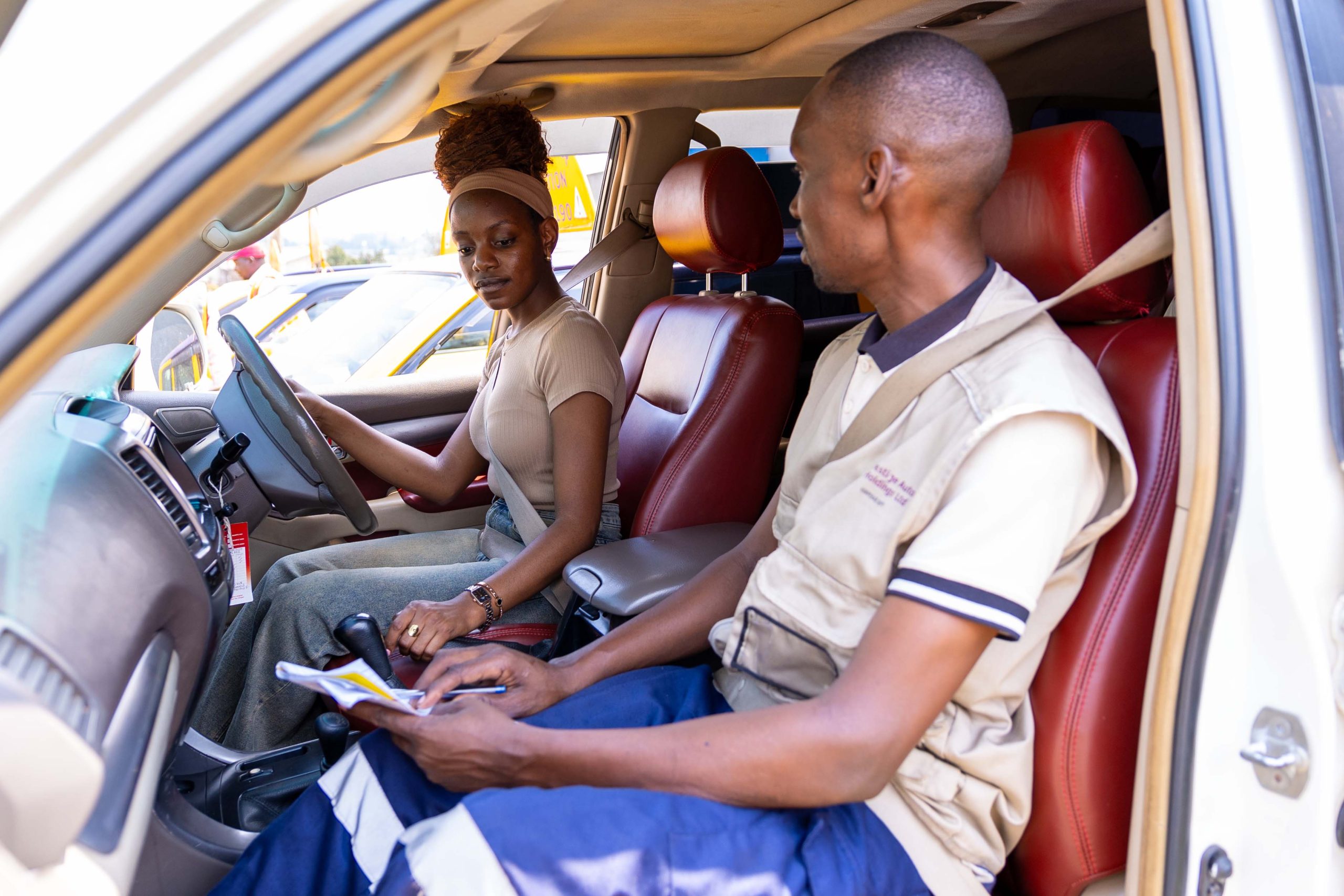
Passing your driving test is just the beginning. The real challenge—and the key to a lifetime of safe travel—is mastering the unpredictable environment of Ugandan roads. For the team at Uganda Driving School, competence goes beyond basic vehicle control; it’s about developing the proactive mindset and advanced driving skills in Uganda needed to confidently handle any situation, from Kampala’s peak traffic to the remote stretches of a safari road.
The Shift: From Reactive to Proactive Driving
The foundational principle of advanced safety training is moving a driver from reacting to hazards to anticipating and preventing them. This defensive driving system, taught by Uganda Driving School’s certified instructors, is built on constant awareness and calculated space management.
1. The Power of the 20-Second Scan
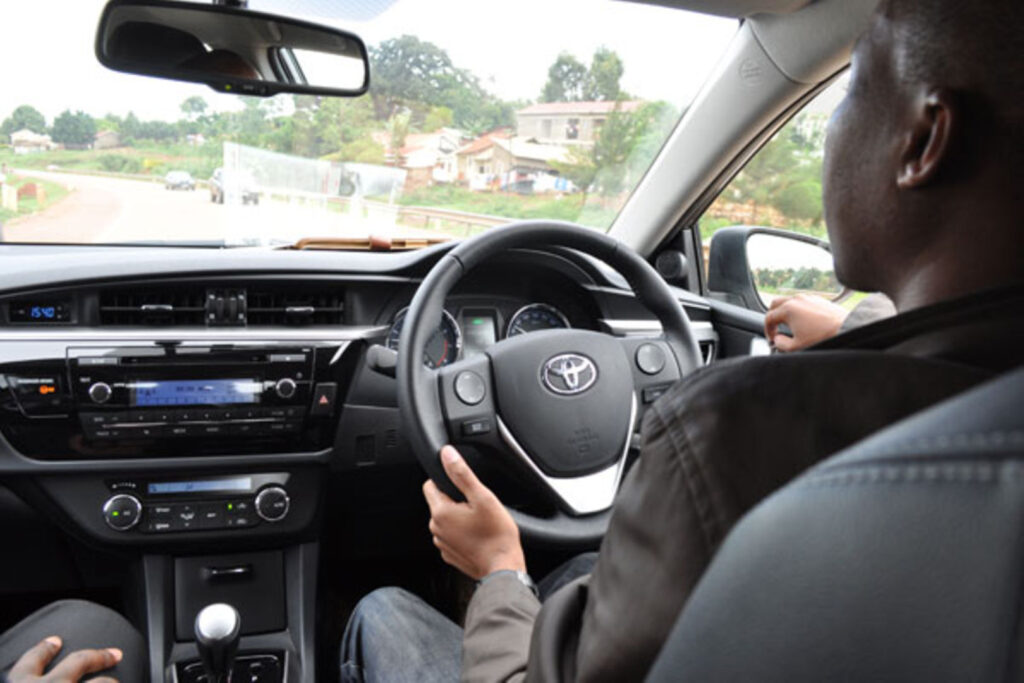
While most drivers focus on the car immediately in front of them, advanced drivers learn to look far down the road.
- Look Far Ahead: Aim your vision 20 to 30 seconds ahead. This gives you time to spot a hazard, like a sudden lane closure, a vehicle slowing to turn, or children playing near the road, well before it becomes an emergency.
- Constant Mirror Checks: Instructors drill the habit of checking all three mirrors (rearview and side) every 5-8 seconds. This ensures you always know your “escape route” and the traffic situation behind you, which is vital when heavy traffic or aggressive drivers enter your safety buffer.
2. Mastering the Space Cushion
In Uganda, where the actions of Boda-bodas and public service vehicles can be unpredictable, your space cushion is your greatest protector.
- The 3-to-4 Second Rule: Always maintain a minimum 3-second gap between your vehicle and the one ahead.2 On highways, in rain, or when following a large truck, extend this to 4 seconds or more. This prevents tailgating and gives you the distance needed for emergency braking.
- The Side Buffer: In multi-lane traffic or when passing parked vehicles, advanced training emphasizes maintaining adequate space to the sides. If you must pass a taxi or bus, do so quickly and avoid lingering in their massive blind spots.
🚨 Emergency Maneuvers and Vehicle Control
Advanced training moves beyond theoretical knowledge to practical, hands-on control under pressure.

1. Controlled and Emergency Braking
Modern vehicles are equipped with ABS (Anti-lock Braking System), but many older vehicles are not. Instructors teach techniques for both:
- ABS Practice: Learn to apply firm, steady, and maximum pressure on the brake pedal—not pumping it—to utilize the system’s full capability while maintaining steering control.
- Non-ABS Technique: Practice modulating brake pressure to avoid wheel lock-up, understanding that a skidding tire takes longer to stop than a rolling one. Crucially, learn how to steer while braking hard to avoid an obstacle.
2. Skid Avoidance and Recovery (Low Traction Surfaces)
Uganda’s roads frequently shift from dry tarmac to gravel, mud, or slick surfaces during the rainy season.
- Gentle Inputs: The key to avoiding a skid is using gentle, smooth inputs on the steering, accelerator, and brakes when driving on low-traction surfaces. Sudden movements are the enemy of control.
- Skid Recovery: Should your car slide (especially common on murram roads), the instruction is simple: Take your foot off the brake/accelerator and steer gently in the direction you want the front of the car to go. Looking where you want to go helps guide your hands naturally.
🌙 Night Driving and Hazard Management
Driving after dark in Uganda is advised against due to lack of street lighting, unlit vehicles, and unseen road hazards.11 However, if unavoidable, advanced training prepares you.

- Glare Management: Learn to manage the blinding glare of oncoming high beams. Instead of staring directly at the light, shift your focus slightly to the left edge of your lane while remaining aware of the oncoming vehicle.
- Responsible High Beam Use: Use your high beams only when the road ahead is clear, and dip them immediately upon seeing an oncoming vehicle or catching up to a car ahead.
- Fatigue Management: On long journeys, instructors emphasize recognizing the early signs of fatigue (frequent yawning, difficulty focusing) and teach structured break routines to manage it.
By enrolling in advanced safety courses, drivers do more than refine their skills; they invest in a mindset that prioritizes safety and prepares them for the reality of driving in Uganda. This is the difference between simply driving and truly driving with confidence.
Bryan Muhoozi